

From Seedlings to Market-Ready Selections
Peony Show Garden is built on a clear principle: strong genetics must prove themselves in practice before they earn attention in the market.
Peony Showgarden Holland reflects an active process of selection, comparison and development. Alongside established cultivars, the Showgarden presents new seedlings, advanced selections and material that is gradually moving toward professional production.
This makes the Showgarden more than a place to admire flowers. It is a place to see how genetics perform in practice: in the soil, in the plant, and in the flower. Some plants are still under evaluation. Others have already proven enough to move further into commercial development or international distribution.
How Selection takes Shape
Behind the showgarden is a long-term breeding program built on one simple principle: strong genetics must prove themselves in practice before they earn a place in the market.
Each year, thousands of seedlings move through different stages of evaluation. One of the first major selection moments takes place in the second year of growth, when around 5,000 young plants enter greenhouse assessment. From that point onward, selection becomes increasingly strict.
Selection Criteria
- Natural plant strength and balanced growth
- Stem quality and stability, with preference for plants that do not require support
- Health and resilience under practical growing conditions
- Flower characteristics relevant to professional markets
- Distinctiveness and long-term potential
Only a small percentage continues into advanced selection.
From Seedlings to Advanced Lines
The plants shown at Peony Showgarden Holland represent different stages of development. Some are early selections, some are advanced lines that are already moving toward professional production. Other varieties have already entered international distribution. This is what makes the showgarden especially valuable for professional visitors. It offers a rare opportunity to compare, and to assess material in relation to real field performance, flowering behavior and market use.

Different Routes to Stronger Genetics
The breeding work behind the showgarden combines two complementary approaches:
- Open pollination is used to explore diversity and uncover unexpected strengths.
- Controlled crosses are used to work more deliberately toward specific traits and combinations.
Together, these two routes create both freedom and direction within one practical breeding program: broad enough to discover something special, focused enough to keep building toward stronger and more useful selections.

Built for the Long Term
The Showgarden continues to grow, with cultivars and selections supplied by our network of growers. The program is moving toward a more fully documented and internationally recognized breeding platform. Formal cultivar registration with the American Peony Society (APS) is part of that next phase, alongside further development of records, documentation and structured cultivar information.
Peony Showgarden Holland offers visibility into that process. What visitors see is a living program shaped by observation, comparison, selection, and years of practical field experience.
Compare Growth & Flower Characteristics

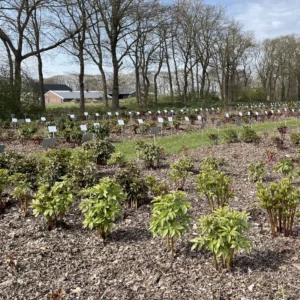
In one field setting, cultivars and new introductions can be observed across the flowering season. Early, mid-season and later types reveal themselves not as abstract labels, but as visible timing differences in practice. And that is highly relevant for planning, succession and commercial orientation. The photo of our showgarden is taken in April 2026.
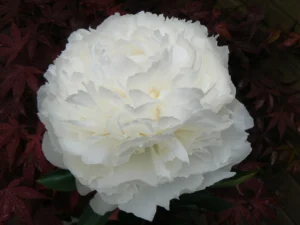
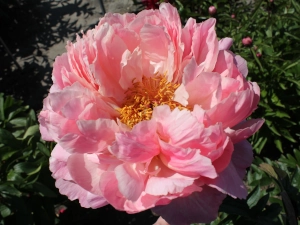 The showgarden allows visitors to compare how cultivars differ in fragrance, flower form, fullness, colour character and visual impact. Single, semi-double and double forms, as well as subtle differences in tone and presentation, become much easier to understand when seen side by side under the same conditions. On the left the Bowl of Cream and on the right Coral Charm.
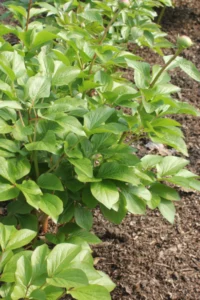
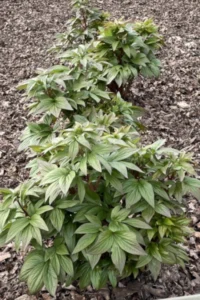
Not all differences are found in the flower alone. Height, structure, stance and foliage all contribute to how a cultivar performs and presents itself in the field. These characteristics are often easier to assess in person than in photography, especially when multiple cultivars can be compared within the same environment. Photo on the left is the Lux et Veritas peony plant and on the right the 2 Tone Beauty.
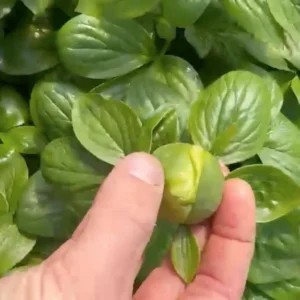
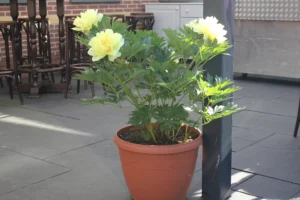
Some cultivars immediately suggest different applications in the market. Certain types show clear cut flower potential, while others are more naturally aligned with garden use, landscaping or pot presentation. The showgarden does not reduce cultivars to fixed categories, but it helps professionals recognise these distinctions at first sight. The photo shows the bud of the Early Sensation peony.
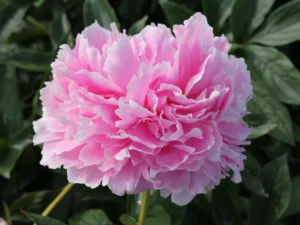
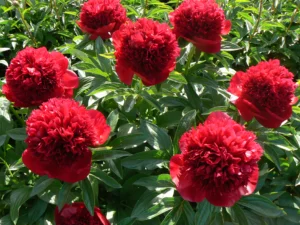
Herbaceous peonies, Itoh hybrids and other peony types can also be understood more clearly when seen in the field. Their differences are not only botanical, but practical and visual — from structure and flowering habit to overall market impression. The photos show three iconic peony types: the lactiflora peony Sarah Bernhardt on the left, the herbaceous hybrid peony Red Charm on the right, and the Itoh peony Bartzella below.
On mobile: push tabs to the left to see all tabs.
In one field setting, cultivars and new introductions can be observed across the flowering season. Early, mid-season and later types reveal themselves not as abstract labels, but as visible timing differences in practice. And that is highly relevant for planning, succession and commercial orientation. The photo of our showgarden is taken in April 2026.
The showgarden allows visitors to compare how cultivars differ in fragrance, flower form, fullness, colour character and visual impact. Single, semi-double and double forms, as well as subtle differences in tone and presentation, become much easier to understand when seen side by side under the same conditions. Above the Bowl of Cream and below Coral Charm.
Not all differences are found in the flower alone. Height, structure, stance and foliage all contribute to how a cultivar performs and presents itself in the field. These characteristics are often easier to assess in person than in photography, especially when multiple cultivars can be compared within the same environment. Photo above is the Lux et Veritas peony plant and below the 2 Tone Beauty.
Some cultivars immediately suggest different applications in the market. Certain types show clear cut flower potential, while others are more naturally aligned with garden use, landscaping or pot presentation. The showgarden does not reduce cultivars to fixed categories, but it helps professionals recognise these distinctions at first sight. The photo shows the bud of the Early Sensation peony.
Herbaceous peonies, Itoh hybrids and other peony types can also be understood more clearly when seen in the field. Their differences are not only botanical, but practical and visual, from structure and flowering habit to overall market impression.
The photos show three iconic peony types: the lactiflora peony Sarah Bernhardt above, the herbaceous hybrid peony Red Charm in the middle, and the Itoh peony Bartzella below.
Cultivars
More than 4000 cultivars
Established & New
50/50 mix of established and new selections
Field grown
Grown with sustainable practices
Trade focused
Built for growers, exporters and traders